Ankle pumps
Point the toes away, then pull them back toward the body in a steady rhythm. This keeps the ankle moving and supports circulation.
Movement after knee replacement
Common exercises that may be part of an at-home physical therapy plan after total knee replacement.
The early essentials
Early physical therapy usually focuses on four practical goals: keeping blood moving, helping the knee bend, regaining full straightening, and waking up the muscles that support the joint.
Many programs use short sessions throughout the day. A common starting point is around 10 repetitions, two or three times daily, but use the exact schedule provided by your care team.

Common early exercises
Ask your therapist to watch your form before practising alone.
Point the toes away, then pull them back toward the body in a steady rhythm. This keeps the ankle moving and supports circulation.
With the leg straight, tighten the thigh and gently press the back of the knee toward the bed. Hold for 5–10 seconds, then relax.
Tighten the buttock muscles, hold for about 5 seconds, and release. Keep breathing normally.
Slide the operated heel toward the buttocks, bending the knee as comfortably as possible. Slowly slide the leg straight again.
Support the heel on a rolled towel so the knee is free. Relax the leg and allow the knee to straighten gently. Do not place the roll directly behind the knee.
Place a rolled towel beneath the knee. Keeping the knee supported, straighten the lower leg and lower it with control.
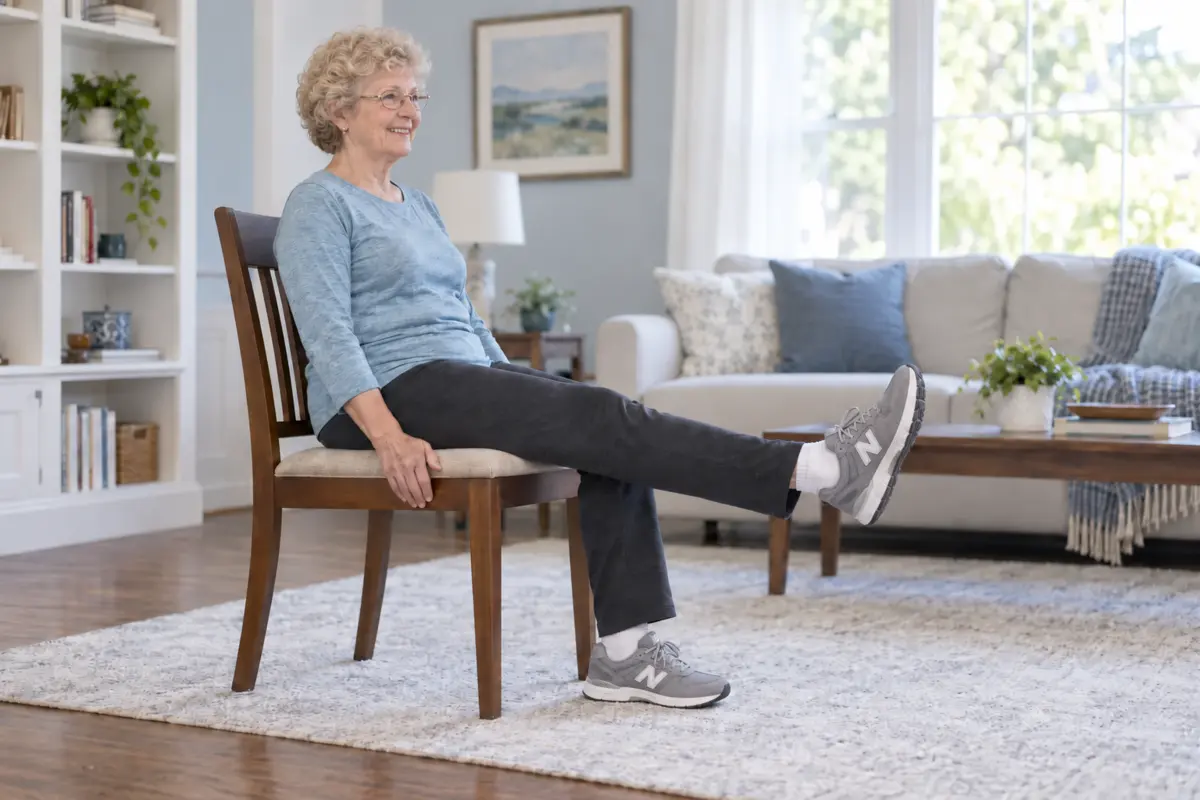
Tighten the thigh, keep the knee completely straight, lift the leg several inches, and lower slowly. Only do these when your therapist says you are ready.
Sit in a sturdy chair and slide the operated foot back underneath you. Hold the comfortable bend briefly, then release.
As recovery progresses
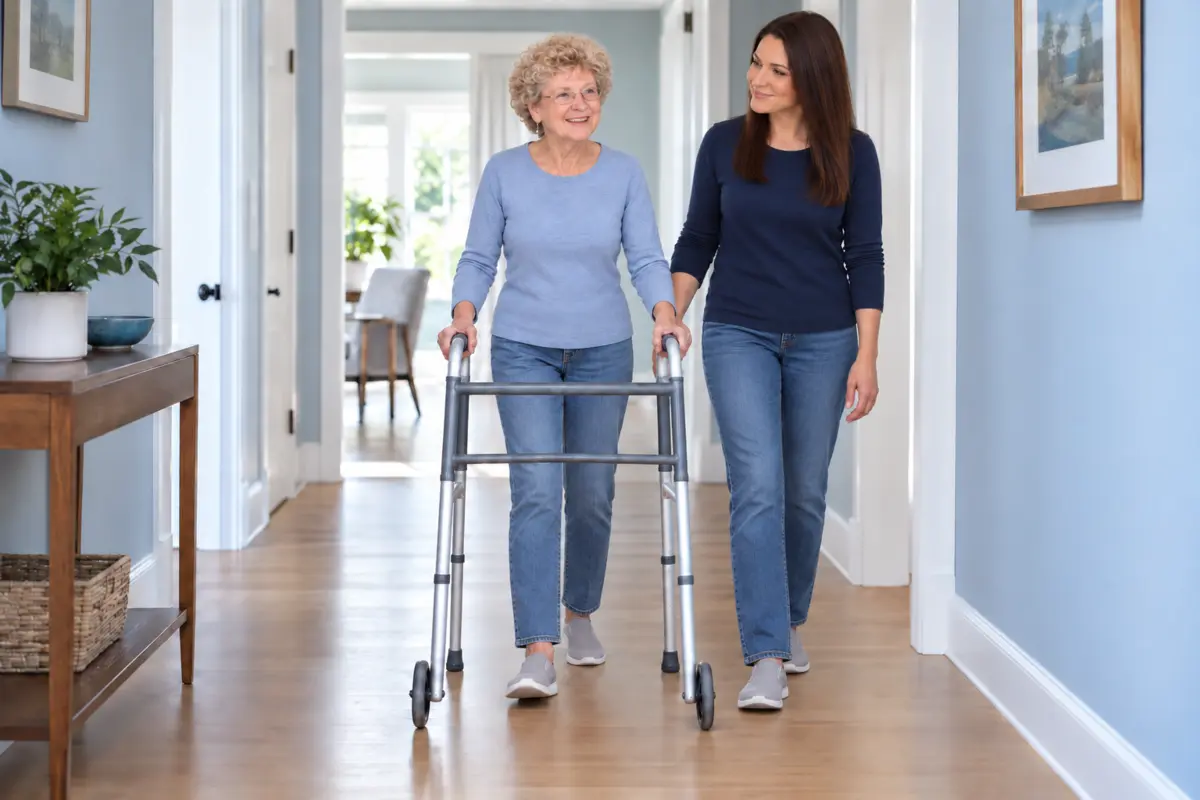
When strength, balance, and knee motion improve, a therapist may add standing knee bends, calf raises, sit-to-stands, mini-squats, step-ups, bridges, stationary cycling, balance work, and gradually longer walks.
Wait for clearance before adding resistance, deeper squats, unsupported balance exercises, step-ups, or cycling.
Listen to the response
A gentle stretch, stiffness, or muscle fatigue can be expected. Stop the exercise and contact your care team for sharp or sudden pain, buckling, dizziness, wound pulling or drainage, or a major increase in swelling.
New or worsening calf pain or swelling, fever, increasing redness, or worsening wound symptoms need prompt medical advice. Chest pain or difficulty breathing may be an emergency. In the U.S., call 911.
Medical guidance
This overview was informed by patient education from the American Academy of Orthopaedic Surgeons and the American Association of Hip and Knee Surgeons.